Importing Korean Sunscreen to US: OTC Compliance Guide
Avoid customs seizures. Our guide to importing Korean sunscreen to US covers FDA OTC drug compliance, labeling traps, and sourcing compliant K-beauty suppliers.
On this page
Planning on importing Korean sunscreen to US markets? Many distributors make the mistake of treating sun protection as a standard cosmetic. This regulatory gap can lead to costly custom seizures and major inventory losses. Before you begin, learn how AAMOND Beauty works for buyers to help you source products that match destination market requirements.
The Compliance Gaps in Importing Korean Sunscreen to US
In South Korea, sunscreens are classified as 'functional cosmetics' under the Ministry of Food and Drug Safety (MFDS). They undergo rigorous domestic testing, but their legal status changes immediately upon arriving at US ports. The United States Food and Drug Administration (FDA) treats sunscreens as Over-The-Counter (OTC) drugs. Selling unapproved OTC drugs in the US carries heavy legal penalties, including product destruction and nationwide recalls.
FDA Approved UV Filters vs. Korean UV Filters
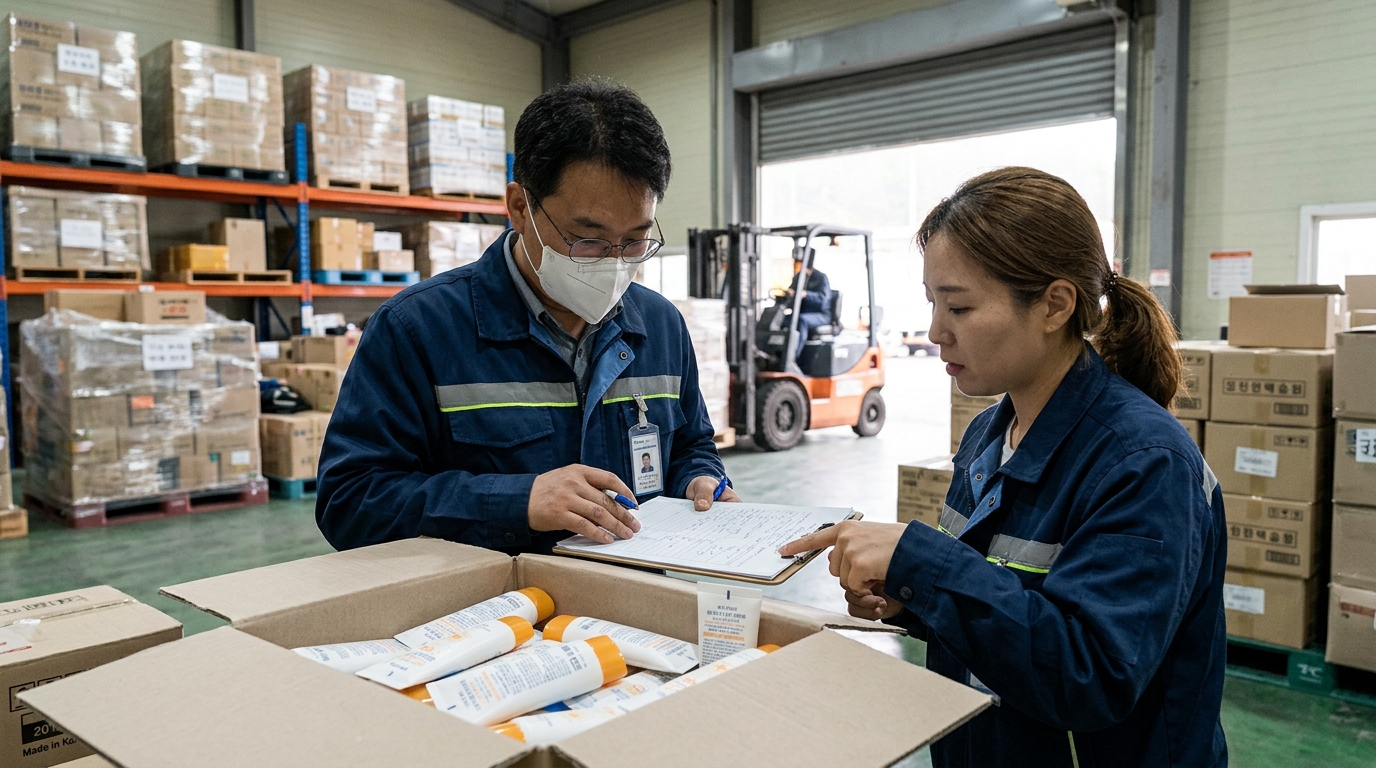
The biggest challenge is formulation. Modern Korean sunscreens often use advanced UV filters like Uvinul A Plus and Tinosorb S. These filters provide superior cosmetic elegance and lightweight textures. However, the US FDA has not updated its approved sunscreen monograph to include these ingredients. The FDA sunscreen monograph relies heavily on older mineral filters like Zinc Oxide and Titanium Dioxide, or older chemical filters like Avobenzone. If a formula contains unapproved filters, US Customs will seize the shipment. For example, a prominent Seoul-based skincare exporter recently suffered a complete loss of a 20,000-unit shipment at the Port of Long Beach because their formulation contained Tinosorb M, which is not an FDA-approved active ingredient.
Manufacturing Requirements and the Drug GMP Challenge
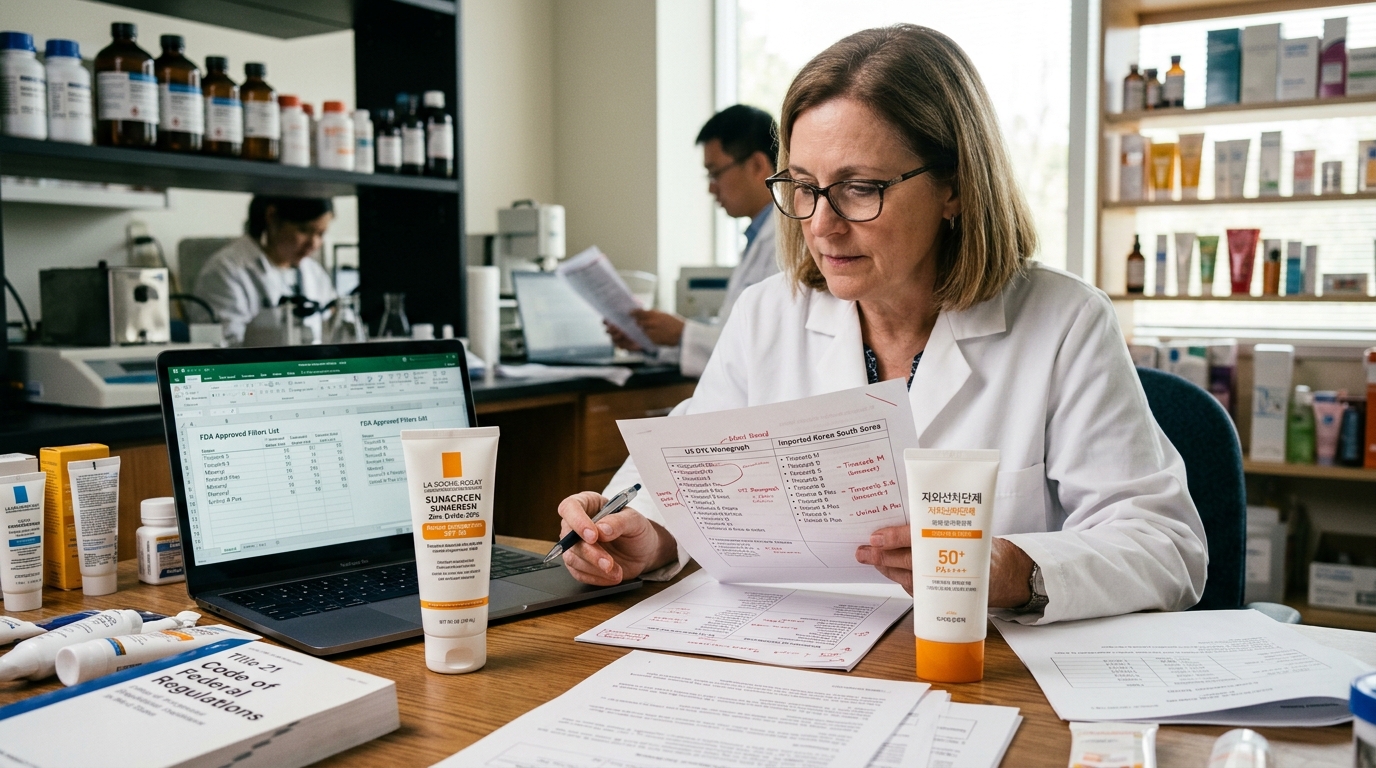
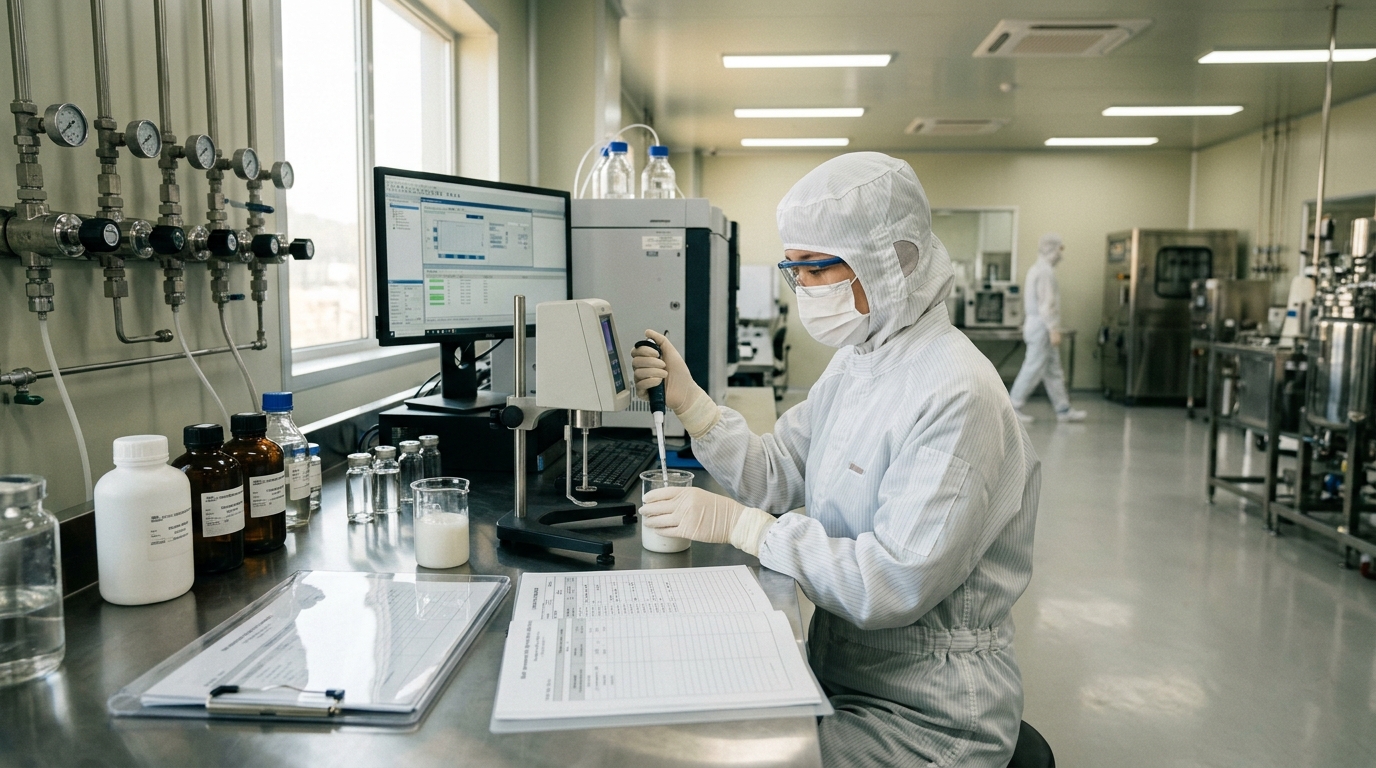
To legally export sunscreens to the US, manufacturers must operate under drug Good Manufacturing Practices (GMP) rather than standard cosmetic GMP. This is a critical distinction. Under the Modernization of Cosmetics Regulation Act (MoCRA) and established FDA guidelines, facilities producing OTC drugs must register directly with the FDA and submit to regular drug-safety inspections. Additionally, every single sunscreen product must obtain a National Drug Code (NDC) listing. According to data from the Korea Trade-Investment Promotion Agency (KOTRA), only a select handful of South Korean original design manufacturers (ODMs) hold active, FDA-registered drug GMP facilities. If you source from an unregistered facility, your shipment is practically guaranteed to be detained.
Labeling Traps and Mandatory Drug Facts Panels
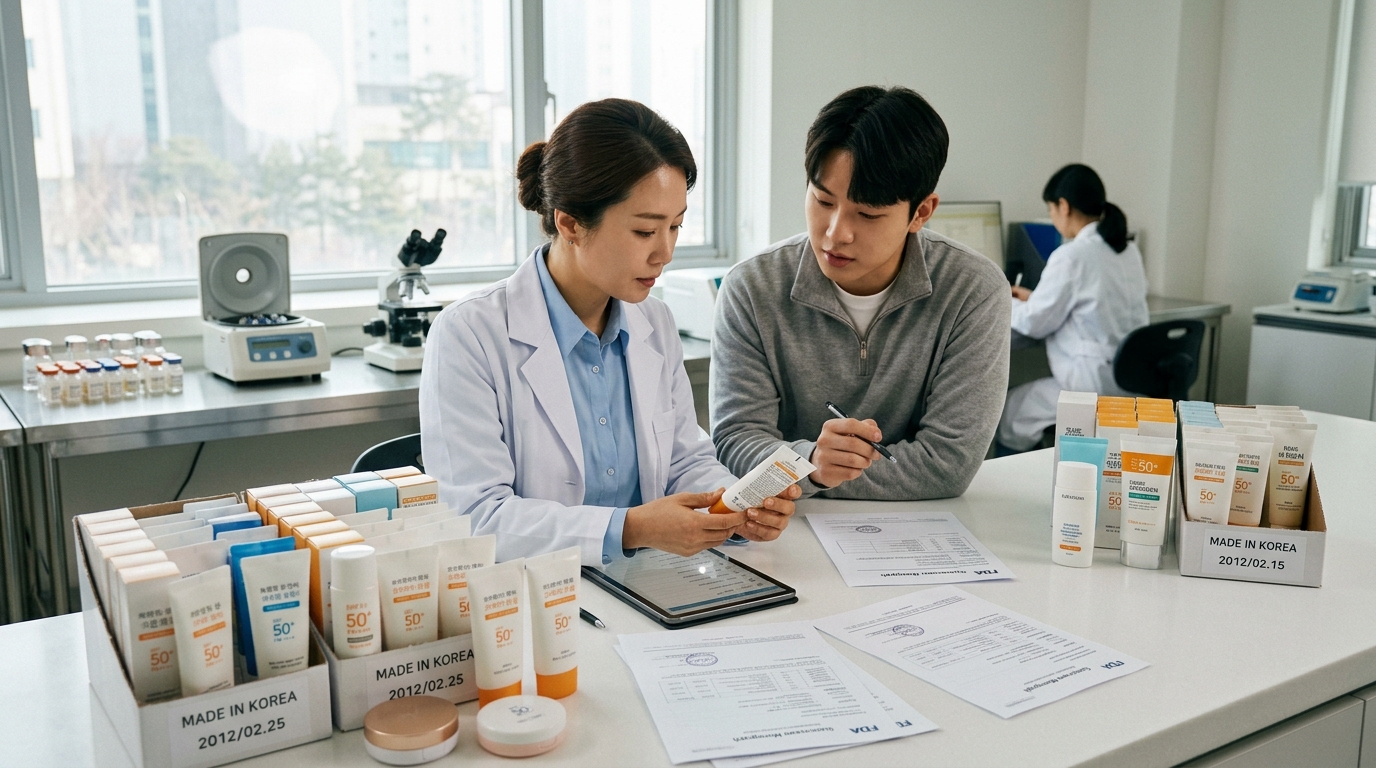
US packaging rules are incredibly strict. You cannot sell a sunscreen in the US with standard Korean cosmetic labeling. All products must feature an English-only 'Drug Facts' panel, which lists active ingredients, uses, warnings, and directions in a highly specific structural layout. Marketing claims are also heavily restricted. The term 'sunblock' is legally prohibited by the FDA because no product can completely block all UV rays. You must also have verifiable clinical testing from an FDA-registered laboratory to claim specific SPF levels or broad-spectrum protection.
How to Safely Source Compliant K-Beauty Sunscreens
Navigating this landscape requires the right partnerships. You should prioritize major Korean OEM/ODM manufacturers that possess proven track records of US compliance. Rather than importing existing domestic Korean formulas, consider executing custom formulations designed specifically with FDA-monographed filters. You can browse verified K-beauty suppliers on AAMOND Beauty to find manufacturers that meet international regulatory standards. A recent MoCRA-registered supplier verified that custom US-compliant formulas now achieve the same lightweight skin-feel while utilizing US-approved active ingredients.
Navigating the Compliance Journey Safely
In conclusion, importing Korean sunscreen to US distributors requires thorough due diligence to avoid catastrophic border detentions. By understanding OTC guidelines and auditing your suppliers' GMP registrations, you can capture this high-demand market safely. Ready to secure FDA-compliant manufacturing partners? Start your sourcing request today.

Frequently Asked Questions
Q: Can I import standard Korean domestic sunscreens and sell them in the US?
No. Standard domestic Korean sunscreens are formulated as functional cosmetics under MFDS rules and often contain UV filters that are not FDA-approved. To sell them in the US, they must be formulated with FDA-monographed active ingredients, manufactured in a drug-GMP facility, registered for an NDC, and feature a compliant Drug Facts label.
Q: What happens if US Customs seizes my imported Korean sunscreen shipment?
If US Customs detains your shipment, you will receive a Notice of Detainment and Hearing from the FDA. You must prove compliance within a limited timeframe, typically 20 days. If you cannot provide an NDC and drug-GMP proof, the FDA will issue an Import Alert, and the products will either be destroyed at your expense or exported back to Korea.
Q: Are there Korean manufacturers that can produce FDA-compliant OTC sunscreens?
Yes. Many major Korean ODMs have established FDA-registered, drug-GMP compliant facilities specifically to cater to the US export market. When sourcing, always request their FDA facility establishment registration number and verification of their drug-GMP certification. You can also submit a sourcing request via AAMOND Beauty to connect with these verified manufacturers.