K-Beauty Product Registration Timeline: Global Guide
What is the K-beauty product registration timeline for global compliance? Learn how to navigate FDA, MoCRA, and EU requirements smoothly.

On this page
Understanding the K-beauty product registration timeline is essential for retail buyers looking to import cosmetics successfully. To streamline your sourcing, you can learn how AAMOND Beauty works for buyers and avoid costly delays.
Decoding the K-Beauty Product Registration Timeline
Timing is everything when launching new cosmetic lines. A delayed launch can miss critical seasonal buying cycles and waste marketing budgets. Distributors must synchronize regulatory approval with inventory planning to maintain consistent shelf supply.

Selecting the right supplier is the single most critical factor in determining how fast your products cross the border. Export-ready suppliers maintain organized documentation, drastically shortening compliance delays.
The US Market: FDA MoCRA Compliance and Timelines
The Modernization of Cosmetics Regulation Act (MoCRA) has introduced strict mandates for the US market. MoCRA requirements for Korean cosmetics brands now demand mandatory facility registration and product listings, transforming previous voluntary processes into legal necessities.
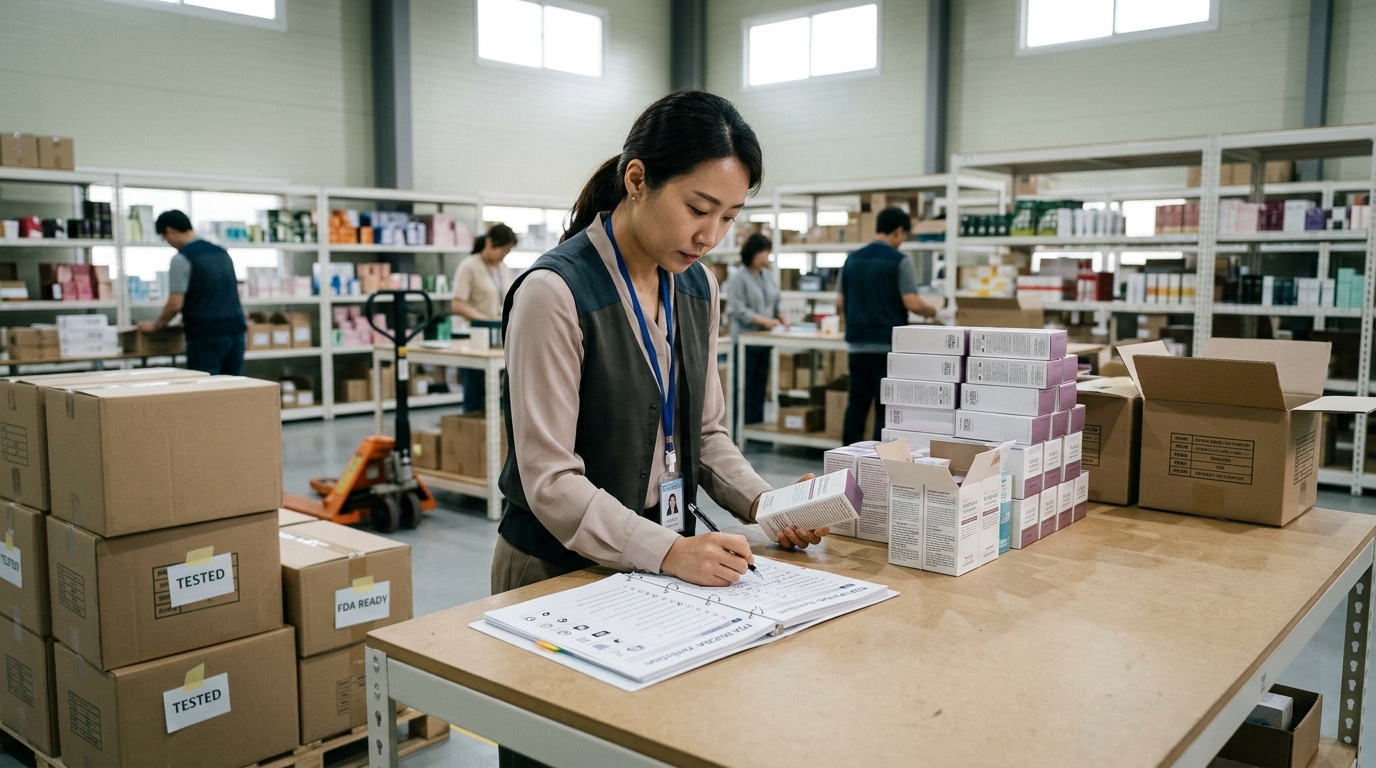
The actual submission for a product listing takes only days. However, the preparation of compliant labeling, safety substantiation records, and designating a US Agent takes several weeks to complete. Compliance must be established before cargo arrives at US ports.
One Korean skincare manufacturer producing specialized serums completed their FDA facility registration in just 10 business days. However, they spent an additional two months reformulating certain colorants to comply with strict FDA-approved ingredient guidelines.
Comparing Global Markets: US vs. EU, UK, and ASEAN
In the EU and UK, product registration relies on the Cosmetic Product Notification Portal (CPNP) and SCPN. This pathway takes 2 to 4 months. It requires a detailed Product Information File (PIF) and a designated Responsible Person (RP) to audit compliance.

By contrast, ASEAN product notifications generally require 1 to 2 months, varying by member state. While the US MoCRA process is technically faster during initial online registration, it enforces much stricter post-market surveillance and audit penalties for violations.
According to data from Korea's Ministry of Food and Drug Safety (MFDS) and KOTRA, over 70% of entry rejections at foreign customs stem from labeling discrepancies rather than unsafe ingredients. You can browse verified K-beauty suppliers to avoid these errors.
Key Factors That Delay K-Beauty Product Approvals
Supplier readiness determines your launch speed. To ensure seamless K-beauty regulatory compliance, suppliers must provide a complete Certificate of Analysis (COA), heavy metal test reports, and animal-free testing documentation matching global cruelty-free standards.
A recent MoCRA-registered supplier found that pre-compiling their COAs and safety dossiers under ISO 22716 guidelines cut their distributor's custom clearance onboarding timeline by 35%. Complete documentation prevents back-and-forth communication delays.
How B2B Buyers Can Minimize Compliance Risks
Before signing supply contracts, always audit a brand's export history. Ensure the manufacturer has experience with importing Korean cosmetics FDA guidelines. Working with pre-vetted exporters reduces compliance risks and guarantees documentation accuracy.

Distributors should always appoint a qualified US Agent or a designated regulatory consultant before shipping any cargo. To streamline this process and access export-ready Korean brands, buyers can submit a sourcing request via AAMOND.
Summary and Next Steps
Navigating international regulatory frameworks is complex, but understanding the K-beauty product registration timeline helps you plan safely. Choosing compliant partners prevents costly custom holds. Start your sourcing request today.

Frequently Asked Questions
Q: How long does it take to register Korean cosmetics under the US MoCRA?
Under MoCRA, the actual portal submission takes only a few days. However, gathering the required safety substantiation, appointing a US Agent, and formatting ingredient lists takes between 4 to 8 weeks.
Q: Do all Korean skincare products require FDA pre-market approval?
No, the US FDA does not require pre-market approval for general cosmetics. However, products classified as Over-The-Counter (OTC) drugs, such as sunscreens and acne treatments, require active drug listing and strict FDA approval.
Q: Can a Korean supplier handle the US cosmetic registration on my behalf?
Many export-ready Korean suppliers can provide the required formulation sheets and COAs, but the US importer or a designated US Agent must officially complete the MoCRA product listing and facility registrations.