Korean Cosmetics Ingredients Banned in EU: Sourcing Guide
Understand which Korean cosmetics ingredients banned in EU affect your supply chain and how US buyers can adapt under new MoCRA standards.
On this page
Why Korean Cosmetics Ingredients Banned in EU Matter to US Buyers
The regulatory gap stems from differing scientific approaches. South Korea's Ministry of Food and Drug Safety (MFDS) utilizes a robust, innovation-friendly framework, whereas the EU Commission employs a strict precautionary principle. Under the MFDS, many ingredients are permitted under specific thresholds that the EU's Annex II bans entirely.

Additionally, Korea's designation of 'Functional Cosmetics'—which includes anti-aging, whitening, and UV protection products—streamlines the approval of advanced chemical compounds. This classification speed creates operational challenges for global importers who assume a top-selling product in Seoul is immediately launchable in Paris or New York.
According to Korea's Ministry of Food and Drug Safety (MFDS) export analysis, harmonizing formulations early in the R&D phase reduces international time-to-market by up to 40%. Buyers must actively audit formulations to prevent shipping delays.
Key Actives and Preservatives to Watch Out For
When reviewing product formulations, several ingredient classes require immediate attention. First are chemical UV filters. While Korea leads in sunscreen innovation, filters like Amiloxate or specific triazines allowed in Korea may have restricted limits or pending bans in Europe.
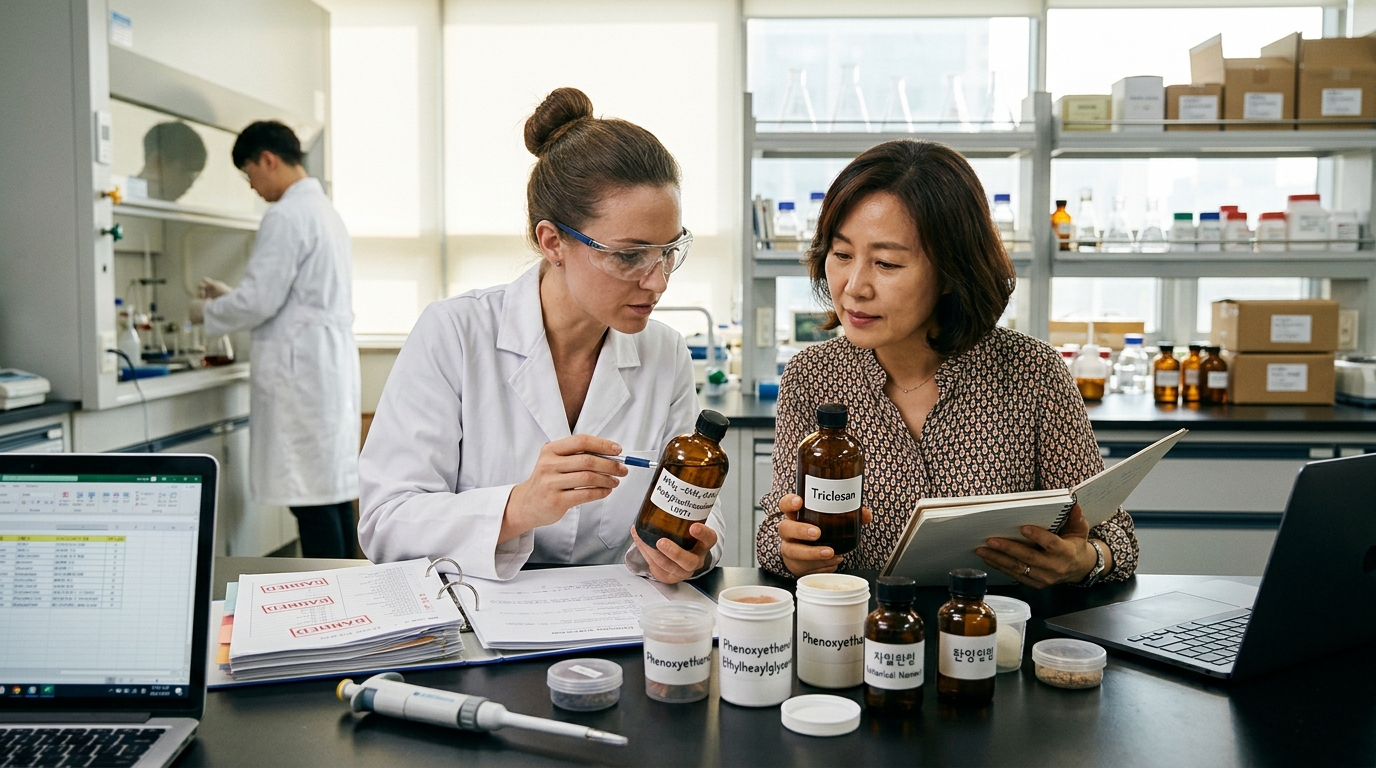
Second, certain cyclic silicones, such as cyclopentasiloxane (D5) and cyclotetrasiloxane (D4), are under heavy restriction in the EU due to environmental bioaccumulation concerns, while remaining popular in K-beauty for their silky texture. Preservatives like certain parabens or specific release agents also face disparate restrictions.
Consider this real-world scenario: A mid-sized US cosmetics importer recently worked with a K-beauty manufacturer and discovered their best-selling daily moisturizer contained D5. To launch in both the EU and the US without holding double inventory, they initiated a K-beauty reformulation project to replace D5 with lightweight plant-based alkanes.
The US Market Angle: MoCRA Alignments with EU Standards
With the enactment of the Modernization of Cosmetics Regulation Act (MoCRA) in the United States, FDA oversight has intensified. While MoCRA does not mirror every EU restriction, it places the burden of safety substantiation directly on the importer of record. This regulatory shift has prompted US buyers to look to EU banned lists as a benchmark for risk mitigation.
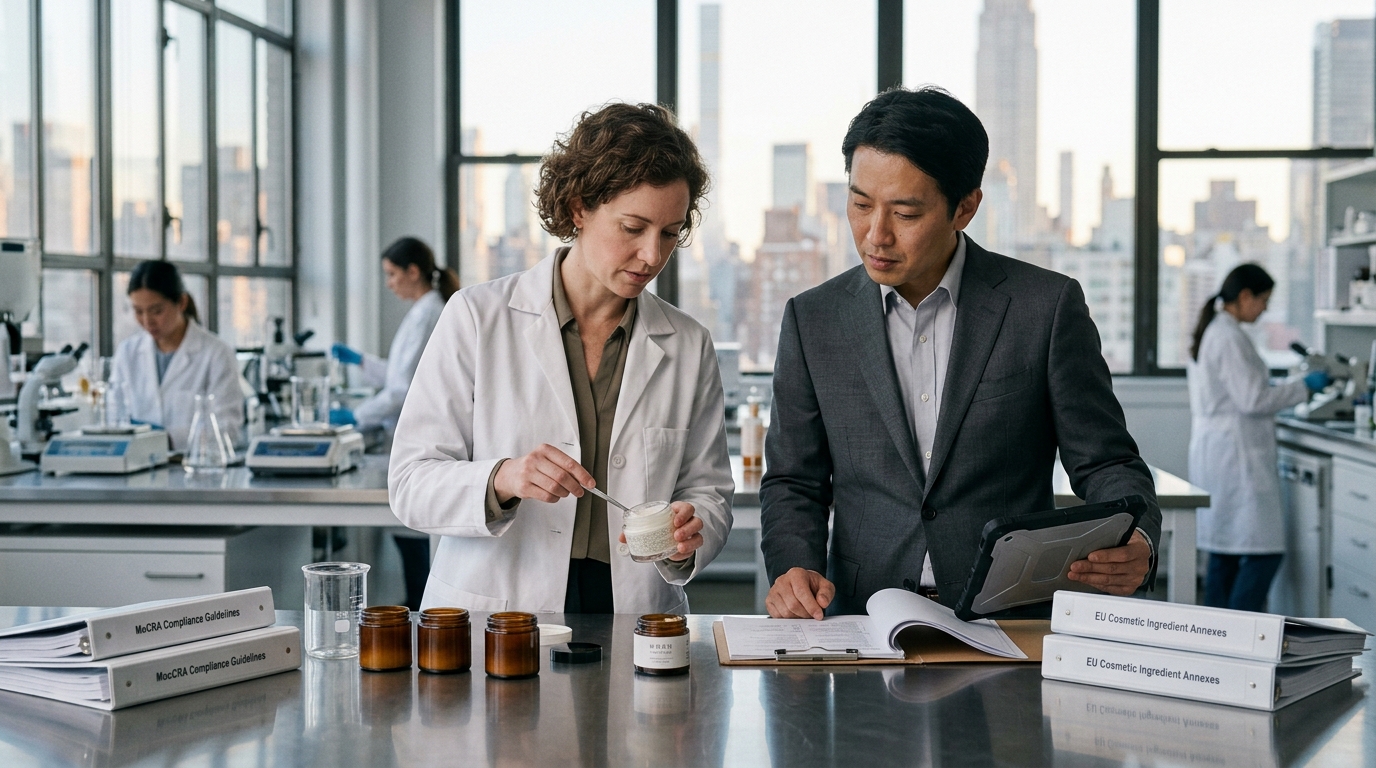
A recent MoCRA-registered supplier found that replacing questionable synthetic preservatives with clean-label alternatives protected their retail partners from consumer backlash and potential class-action liabilities. Achieving compliance under both US FDA guidelines and EU cosmetics compliance is now a standard operational goal for scaling brands.
Furthermore, sourcing products from facilities certified under ISO 22716 GMP standards makes it significantly easier to compile the necessary Safety Data Sheets (SDS) and Product Information Files (PIF) required for global distribution.
A Step-by-Step Reformulation Process with Korean OEM/ODM Partners
To successfully execute a reformulation, brands must utilize structured communication channels. First, clearly define your target markets (e.g., US, EU, UK) when you browse verified K-beauty suppliers on AAMOND Beauty. Request full quantitative ingredient declarations (QIDs) under non-disclosure agreements.
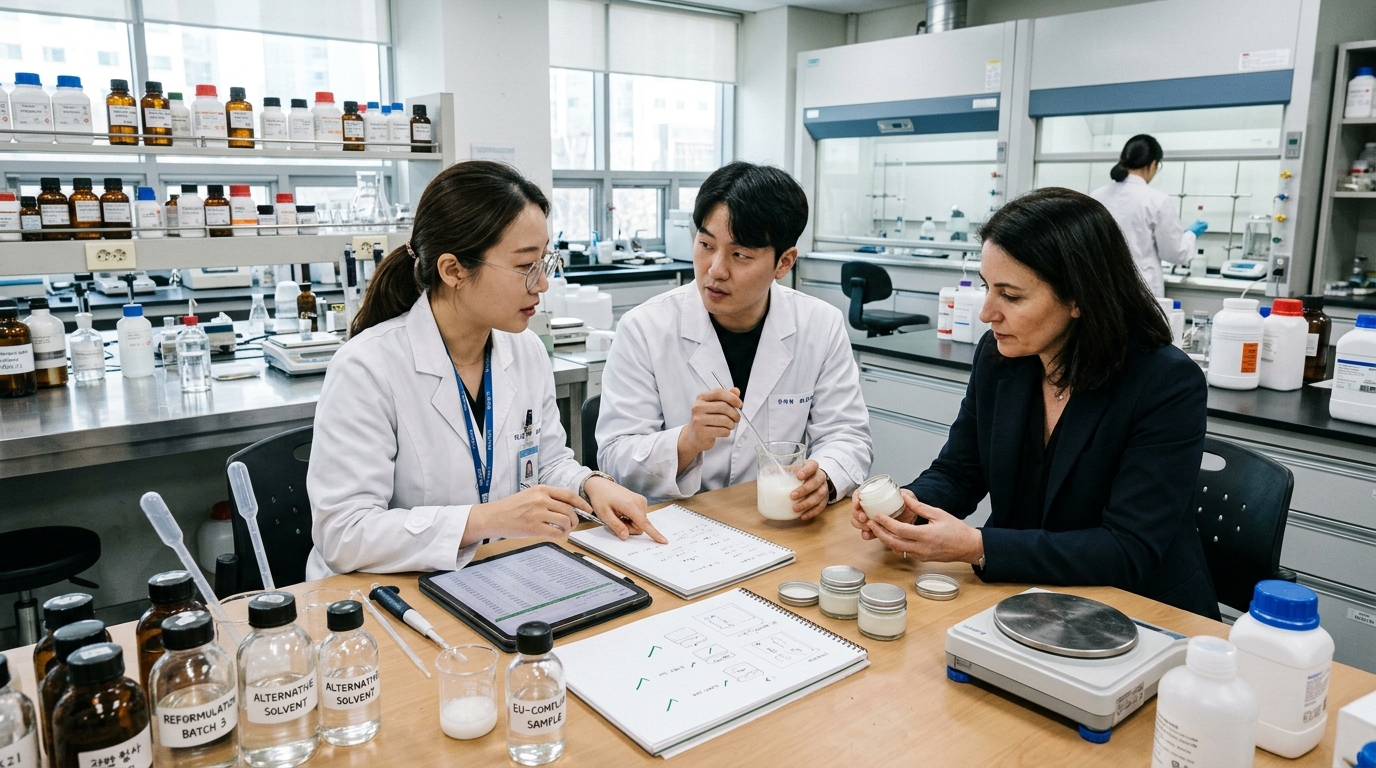
Next, work with the manufacturer's lab to substitute prohibited compounds without altering the iconic sensory profiles of K-beauty products. For instance, replacing restricted silicones with natural esters requires careful adjustments to maintain the desired 'glass-skin' slip and absorption rate.
Be prepared for timeline and cost adjustments. A typical reformulation project requires stability testing (usually 1 to 3 months), Preservative Efficacy Testing (PET), and safety assessments. Budgeting for these steps ensures your product maintains a long shelf life and remains fully compliant.
Leveraging B2B Platforms like AAMOND Beauty for Compliant Sourcing
Navigating global compliance alone is complex. Utilizing dedicated export platforms like AAMOND Beauty allows buyers to filter and identify OEM/ODM suppliers with pre-existing EU (CPNP) and US (FDA) registrations. This ensures the laboratory teams are already familiar with clean-beauty guidelines.

Through our platform, buyers can easily audit supplier certifications, request safety dossiers, and streamline communications with Korean R&D facilities. You can submit a sourcing request to quickly match with compliant manufacturing partners who specialize in Western market regulations.
Ensuring your inventory does not contain any Korean cosmetics ingredients banned in EU protects your brand from costly customs recalls. Ready to navigate K-beauty reformulation with expert suppliers? Start your sourcing request today
Frequently Asked Questions
Q: Can US beauty brands import Korean cosmetics that contain EU-banned ingredients?
Yes, because the US FDA and the EU have different banned substance lists. However, under the new MoCRA guidelines, US importers must possess robust safety substantiation for every ingredient, making EU-compliant formulations a much safer, lower-risk option for US brands.
Q: How long does the reformulation process typically take with Korean cosmetic OEMs?
A standard reformulation project takes between 3 to 6 months. This timeline includes ingredient substitution, sensory optimization, 12-week stability testing, and packaging compatibility assessments.
Q: Are Korean sunscreens compliant with EU and US regulations out of the box?
Generally, no. Many advanced chemical UV filters approved by Korea's MFDS are not approved as active sunscreen ingredients by the US FDA, which treats sunscreens as over-the-counter (OTC) drugs. Sunscreens require specific, market-targeted reformulations, especially to avoid any Korean cosmetics ingredients banned in EU.