Korean Cosmetics Supplier: 12 Red Flags to Avoid
Evaluating a Korean cosmetics supplier? Watch out for these critical compliance, regulatory, and logistics warning signs before signing a B2B contract.
On this page
Finding a reliable Korean cosmetics supplier is crucial for B2B distributors aiming to capitalize on K-beauty's massive global demand. However, the international sourcing landscape presents unique hurdles.
To protect your business investment, you must rigorously screen partners. This guide outlines twelve warning signs that signal a risky partnership when importing skincare or makeup to the US market.
To avoid unverified manufacturers, you can learn how AAMOND Beauty works for buyers to safely source from audited partners.
How to Identify a Risky Korean Cosmetics Supplier
A professional supplier will proactively provide validation documents. If a brand representative avoids answering questions about their physical manufacturing facility, it is a primary warning sign.

Many middlemen pose as direct factories. While trading companies are common, a reputable partner must disclose whether they handle logistics internally or outsource their operations entirely.
You can also browse verified K-beauty suppliers to bypass uncooperative intermediaries and deal directly with certified manufacturers.
1. Failure to Provide MoCRA and US FDA Compliance Documentation
Under the Modernization of Cosmetics Regulation Act (MoCRA), the FDA mandates strict facility registration and product listing for the US market. A supplier's failure to provide MoCRA documentation is a critical compliance risk.
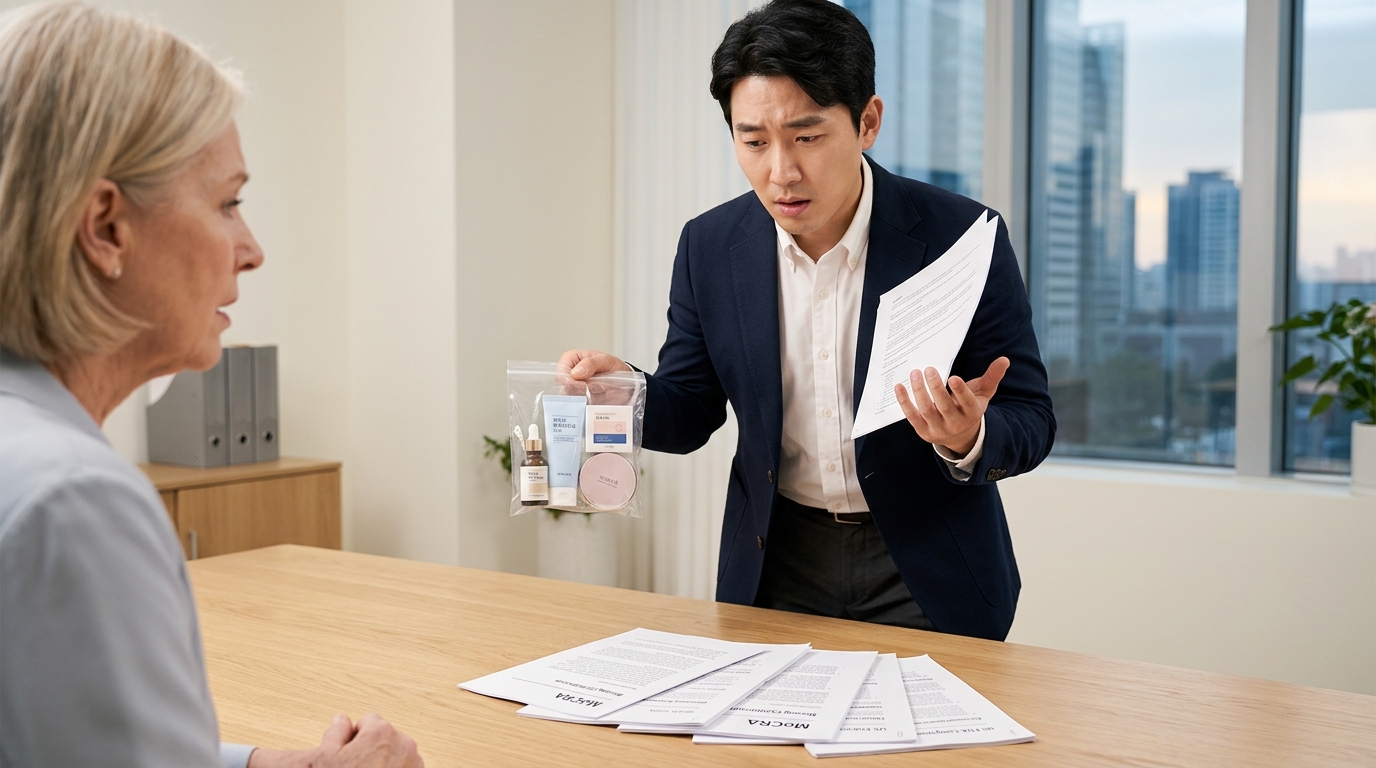
If your prospective partner refuses or delays sending a Certificate of Analysis (COA) or safety data sheets, walk away. Without these, your shipment faces immediate detention at US ports.
Consider this case study: A mid-sized US cosmetics brand imported 5,000 units of a popular sunscreen. Because the manufacturer lacked an established US Responsible Person (RP) network and proper product listing, US Customs seized the entire container.
2. Unverified OEM/ODM Credentials and Lack of ISO 22716 Certifications
Verify if the manufacturer owns a Current Good Manufacturing Practice (CGMP) certified facility. According to Korea's Ministry of Food and Drug Safety (MFDS), manufacturers must adhere to strict quality controls to maintain their active export licenses.

A second case study involves a retail distributor who partnered with a supplier promising in-house R&D. Later, they discovered the supplier outsourced formulation to an uncertified third-party factory, resulting in a severe batch contamination issue.
Always demand direct proof of ISO 22716 certification. Reliable Korean skincare manufacturers will gladly share official factory audit reports to verify their production quality.
3. Rigid, Unrealistic MOQs and Vague Incoterms
Inability to negotiate reasonable Minimum Order Quantities (MOQs) for trial runs indicates a lack of B2B flexibility. If a distributor insists on high volume orders without offering a sample batch, exercise caution.

Furthermore, avoid partners who refuse to clarify standardized Incoterms. Unclear shipping terms, like refusing to specify EXW versus FOB, often lead to unexpected freight broker fees and customs penalties.
Ensure your contracts clearly define logistics liabilities. Transparent partners offer tiered pricing models and use universally recognized shipping agreements to streamline trade.
If you are ready to request custom quotes under secure terms, you can submit a sourcing request to receive verified responses from vetted Korean partners.
Conclusion
Selecting a verified Korean cosmetics supplier guarantees product safety and compliance. Avoid unverified partners and protect your investment. Start your sourcing request today.

Sourcing FAQs
Q: What is the biggest regulatory hurdle when importing Korean cosmetics to the US?
The biggest regulatory hurdle is compliance with the Modernization of Cosmetics Regulation Act (MoCRA). This requires US facility registration, product listings, and safety substantiation dossiers for all imported formulations.
Q: How can I verify if a Korean skincare supplier is legitimate?
Request their ISO 22716 or CGMP certificates, verify their business registration with Korea's Ministry of Food and Drug Safety (MFDS), and utilize a B2B trade platform like AAMOND Beauty that pre-vets suppliers.
Q: What are typical B2B lead times for sourcing cosmetics from Korea?
Standard OEM/ODM production lead times range from 4 to 12 weeks, depending on formulation complexity, packaging availability, and regulatory approval timelines for export.