TT vs LC Payment Terms: Safe Sourcing Guide
Compare TT vs LC payment terms to safely purchase Korean cosmetics. Learn how US beauty buyers mitigate import risks and secure their first bulk orders.
On this page
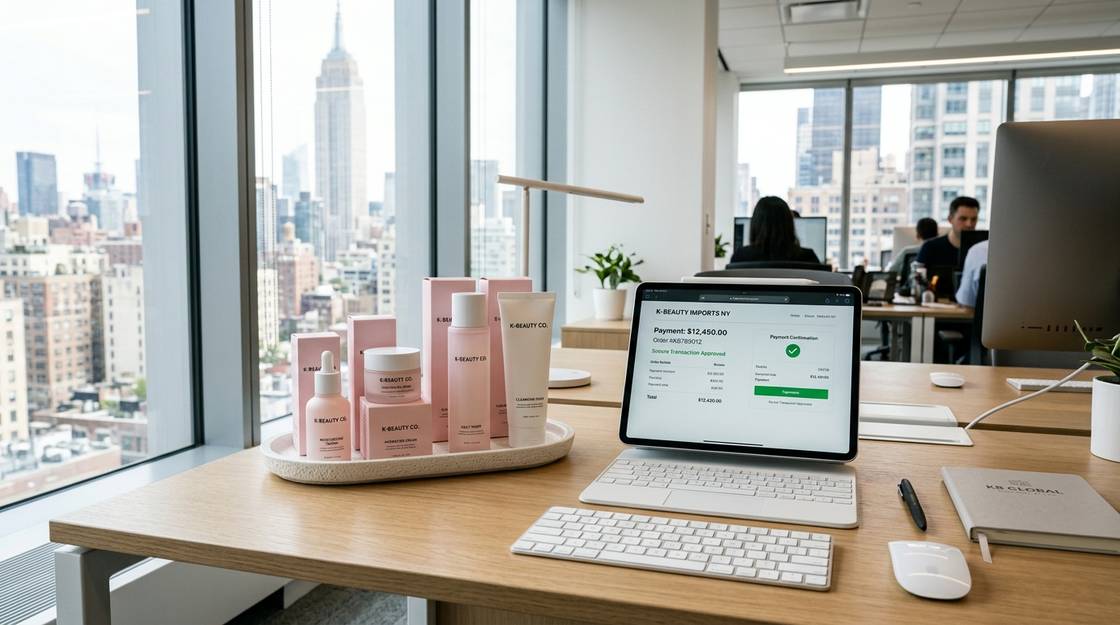
Comparing TT vs LC payment terms helps US buyers protect their capital when sourcing Korean cosmetics. Securing your first bulk order of K-beauty products requires balancing financial safety with supplier trust. Utilizing the right payment structure is key to a smooth import process.
International trade transactions often involve high initial costs. To mitigate risk, smart distributors learn how AAMOND Beauty works for buyers. This platform simplifies sourcing by verifying supplier credentials before any wire transfers occur.
TT vs LC Payment Terms: Understanding the Basics
Telegraphic Transfer (T/T) functions as a direct bank wire. It is fast but places most of the financial risk on the buyer. Conversely, a Letter of Credit (L/C) acts as a bank-backed guarantee. The buyer's bank only releases funds when the supplier presents specific shipping documents.

For first-time orders, transaction volume dictates the best method. Smaller test batches usually rely on T/T due to lower administrative fees. Larger, high-volume orders warrant the strict security of an L/C, especially when dealing with premium skincare lines.
The Pros and Cons of T/T for First-Time US Buyers
T/T transfers are popular because they are fast and inexpensive to process. A standard agreement involves a 30% deposit to initiate production, with the remaining 70% balance paid upon presentation of the Bill of Lading (B/L). However, this offers limited protection if quality issues arise.
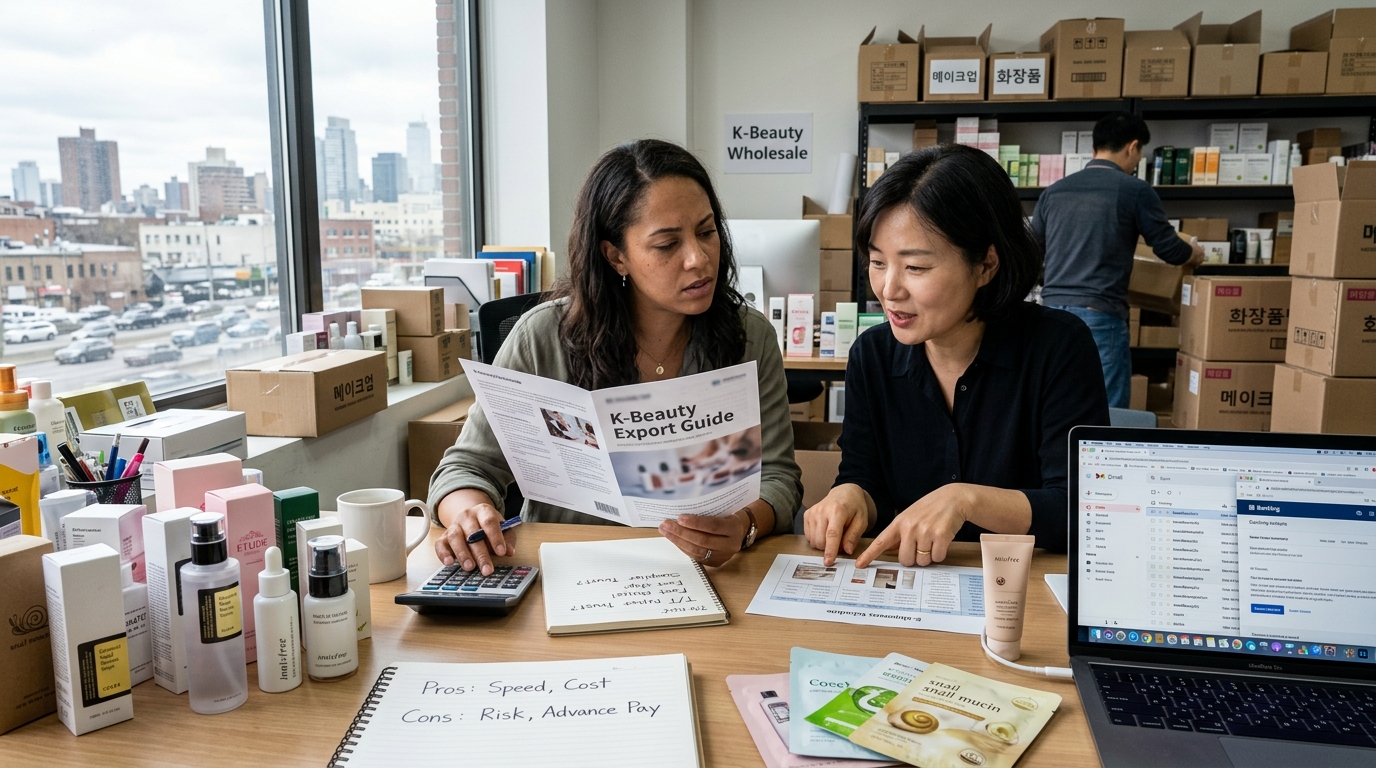
Consider a California-based distributor sourcing sheet masks from an Incheon manufacturer. To protect their capital, they used a T/T split but legally bound the final 70% release to the supplier providing clean lab certificates under ISO 22716 guidelines.
To prevent payment diversion scams, always verify the beneficiary bank details. Ensure the bank account name matches the business license of your Korean supplier. Never send payments to personal bank accounts or third-party entities registered outside of South Korea.
Why L/C (Letter of Credit) Minimizes Risk on Large Orders
An L/C shifts payment risk from the buyer to the issuing bank. The Korean exporter is guaranteed payment only if they meet strict shipping deadlines and documentation requirements. This setup ensures your funds are safe until the products are physically shipped.

According to the Korea Trade-Investment Promotion Agency (KOTRA), using L/Cs for deals exceeding $30,000 USD significantly reduces trade disputes. The documentation process ensures both parties adhere to the agreed-upon delivery timeline, protecting the buyer's retail calendar.
For example, a US retail chain buying $45,000 of sunscreens utilized an irrevocable L/C. They required the exporter to present an FDA compliance certificate alongside the shipping documents. This ensured the supplier complied with US standards before payment was released.
Aligning Payment Releases with FDA and MoCRA Compliance
Sourcing cosmetics for the US market requires compliance with the Modernization of Cosmetics Regulation Act (MoCRA). US buyers should condition final payment releases on the manufacturer providing necessary FDA facility registration and product listing proofs.
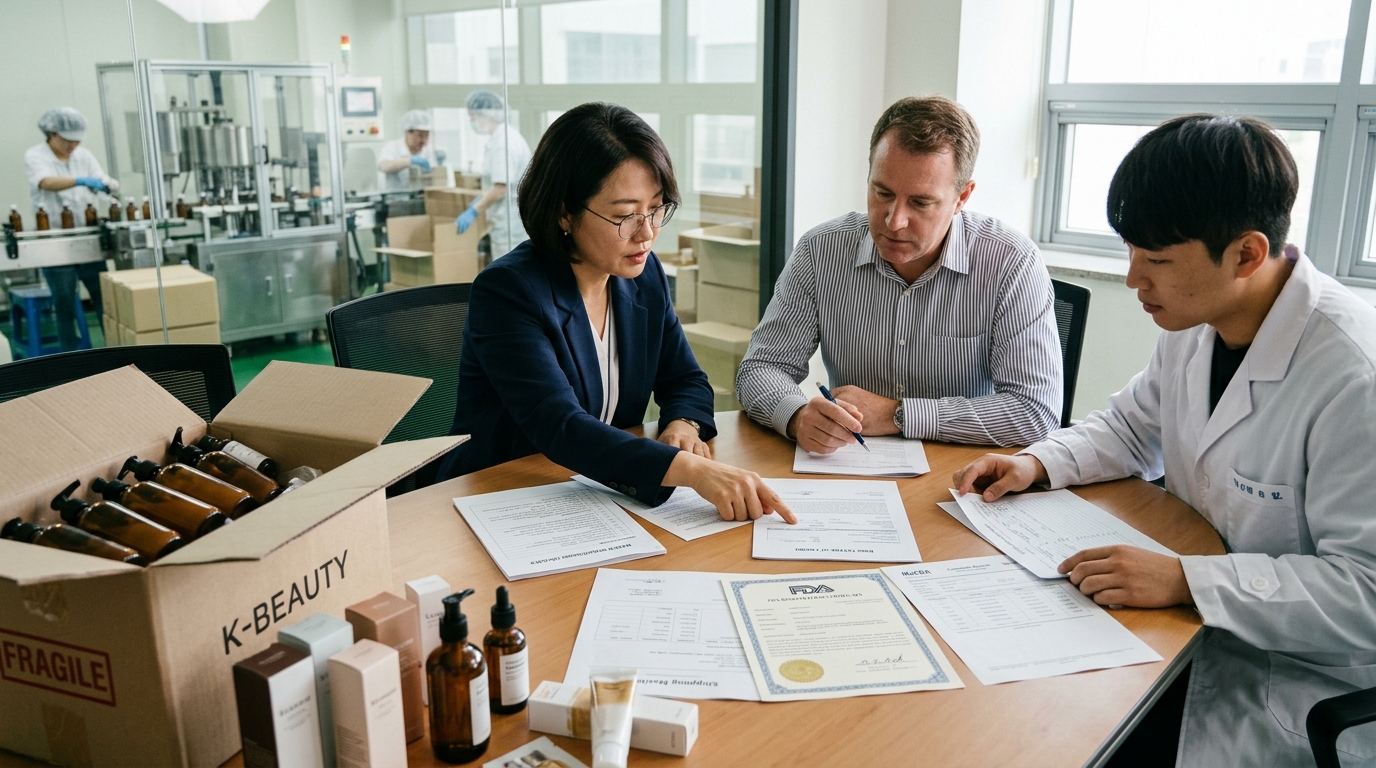
To streamline this, you can browse verified K-beauty suppliers who already possess MoCRA compliance documentation. Aligning payment milestones with compliance verification ensures you do not pay for inventory that could be detained at US ports.
Always include quality-testing clauses in your purchase contract. Specify that final payment is subject to a pre-shipment inspection. If a batch fails quality control or does not meet US FDA guidelines, the funds should not be released until the supplier rectifies the issue.
Negotiating Favorable Terms with Korean Manufacturers
Korean business culture values 'Jeong' (mutual trust and connection). While negotiations should be professional, building a strong relationship can lead to more flexible payment structures. Presenting your US distribution credentials helps establish you as a credible long-term partner.

For initial orders, propose a phased payment milestone. You can suggest a 30/70 T/T split but request that the final 70% be paid 15 days after arrival at the US port. This compromise balances the manufacturer's production costs with your need to verify product quality.
To make negotiations smoother, you can submit a sourcing request via modern B2B platforms. These platforms help bridge the communication gap, allowing US buyers to establish safer, standardized payment milestones with leading Korean skincare manufacturers.
Mitigating Risks with Secure Strategy
Choosing between TT vs LC payment terms depends heavily on your order volume and risk tolerance. While T/T offers speed for smaller testing phases, L/C provides unmatched security for large-scale imports. Establish clear milestones to protect your capital and build successful partnerships.
Partnering with trusted manufacturers ensures a seamless importation process. Start your sourcing request today.
Q: What is the standard payment deposit split for a first-time order with a Korean supplier?
A standard deposit split for initial cosmetic orders is 30% T/T deposit to begin production, with the remaining 70% paid upon presentation of the Bill of Lading (B/L) before shipping.
Q: Does my US bank need to have a direct relationship with the Korean supplier's bank for an L/C?
No, your US bank does not need a direct relationship. International banks use the SWIFT network to securely transmit Letters of Credit (L/C) and financial documents globally.
Q: Are there escrow alternatives to T/T and L/C for smaller K-beauty wholesale orders?
Yes, digitized B2B trade platforms and third-party escrow services can hold funds securely, releasing them to the Korean manufacturer only after shipping verification.